

lernen.svg

Latin at Georgianum

Citizen, citizen, to the citizens

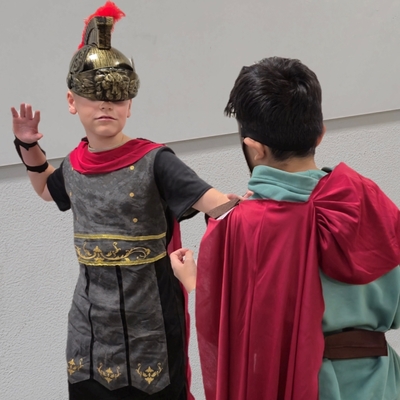
Who doesn't know the call of the Kivelinge? Latin may no longer be spoken, but it is still alive! We contribute to this in our lessons through modern teaching materials and student-oriented teaching methods. We accompany a Roman family in their everyday life, get to know heroes and learn that even Caesar used fake news for his own political ends. Last but not least, you can obtain a qualification – without having to take an exam – that you may need for your studies!

Focus areas of the subject Latin

lower secondary education

(Years 6–10)

Can be chosen as a second compulsory foreign language

(as an alternative to French or Spanish)

Hours per week

  • Years 6–9: 4 hours/week
  • Year 10: 3 hours/week

Qualification

Kleines Latinum (at the end of Year 10)

Content

  • Language course
  • Everyday life of a Roman familia
  • Mythological topics (e.g. Hercules, Trojan Horse, Odysseus)
  • Roman history (e.g. Caesar), philosophy

upper secondary education

(Years 11–13)

  • Continued (from Year 10) or starting afresh from Year 11 as a compulsory foreign language ("Latin new")
  • Can be chosen in the qualification phase as a basic (gN) or advanced (eN) level course

Hours per week

  • Introductory phase (Year 11): 3 hours per week for continued instruction; 4 hours per week for "Latin new"
  • Qualification phase (Year 12/13): 3 hours per week for continued instruction in the gN course, 5 hours per week in the eN course; 3 hours per week for "Latin new"

A-level examination

  • For continued language, can be chosen as an oral or written Abitur examination subject in the gN course, as a written examination subject in the eN course
  • For "Latin for beginners", can be chosen as an oral or written Abitur examination subject in the gN course

Qualifications *

  • For continued language: Latinum (at the end of Year 11), Großes Latinum (at the end of Year 12)
  • For "Latin as a new subject": Kleines Latinum (at the end of Year 13), Latinum (with sufficient performance in the written examination subject or as part of a supplementary examination)

Contents

In continued Latin lessons:
  • Literature by various authors with historical or philosophical content, e.g. Sallust, Seneca
  • Excerpts from speeches (Cicero)
  • Poetic texts, e.g. Ovid, Virgil

In new Latin lessons:

  • Language course
  • Roman culture
  • Mythological, historical and philosophical topics
  • Original texts from 12.2, e.g. Pliny

* The qualifications are achieved by obtaining at least a satisfactory grade in the transfer certificate or in accordance with 12.2. In addition, an average of at least 05 points must have been achieved in the last two half-years of the course.

What else?

20251010_122119-.jpg

Regular events and competitions

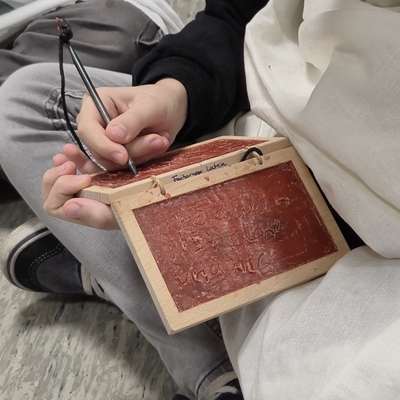
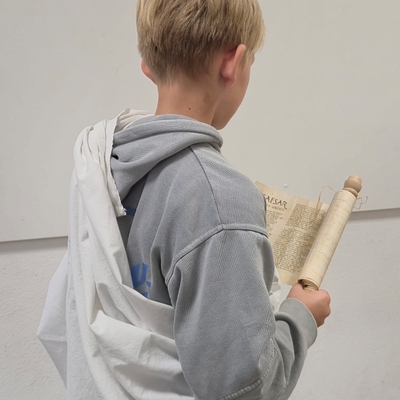
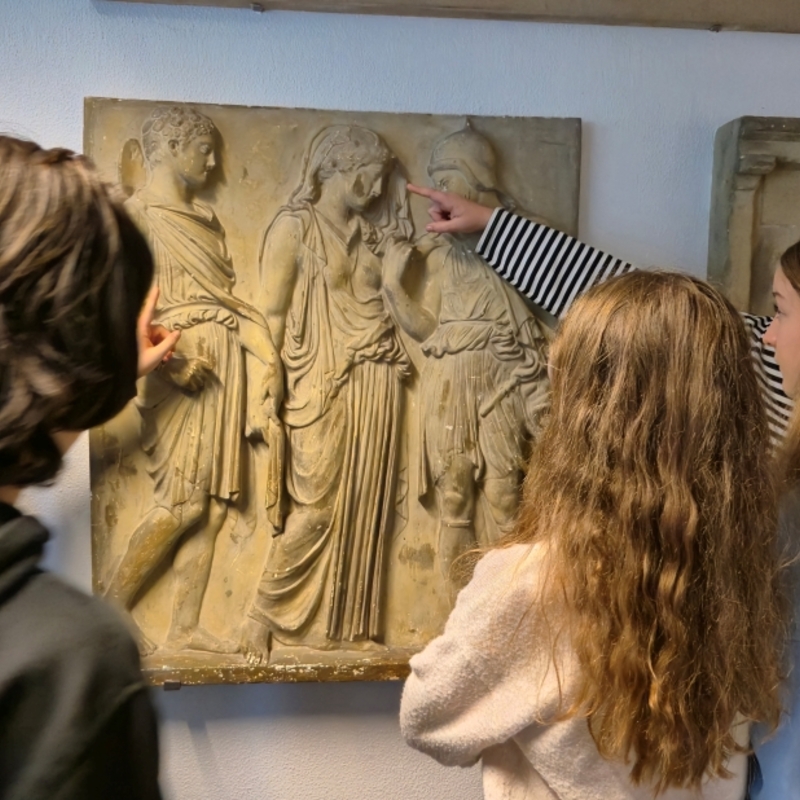
  • Life in ancient Rome: clothing, cooking, cosmetics
  • Escape room about the location and most important buildings of the city of Rome
  • Excursion to Xanten or Kalkriese
  • Participation in the national foreign language competition and the Certamen rerum antiquarum
  • LINGua Latina – Latin in Lingen. A search for clues.
  • Casino Latino

Teachers of Latin

leh-seb.jpg

Ulrike Seele-Berndt

Fachobfrau Latein

Anne Edeler

leh-hng.jpg

Cordula Hörnig

leh-hof.jpg

Elias Hoffmann

leh-kam.jpg

Melanie Kamps

leh-mnt.jpg

Marcel Mentrup

leh-sto.jpg

Andrea Stolte

leh-syd.jpg

Dirk Sydow

Peter Wenisch