




"The aim of education must be to develop individuals who act and think independently, but who see their highest purpose in life as serving the community." – Albert Einstein
Once again this school year, the academy evening in the "revolving door model" represented a successful conclusion to the past projects within the framework of gifted education.
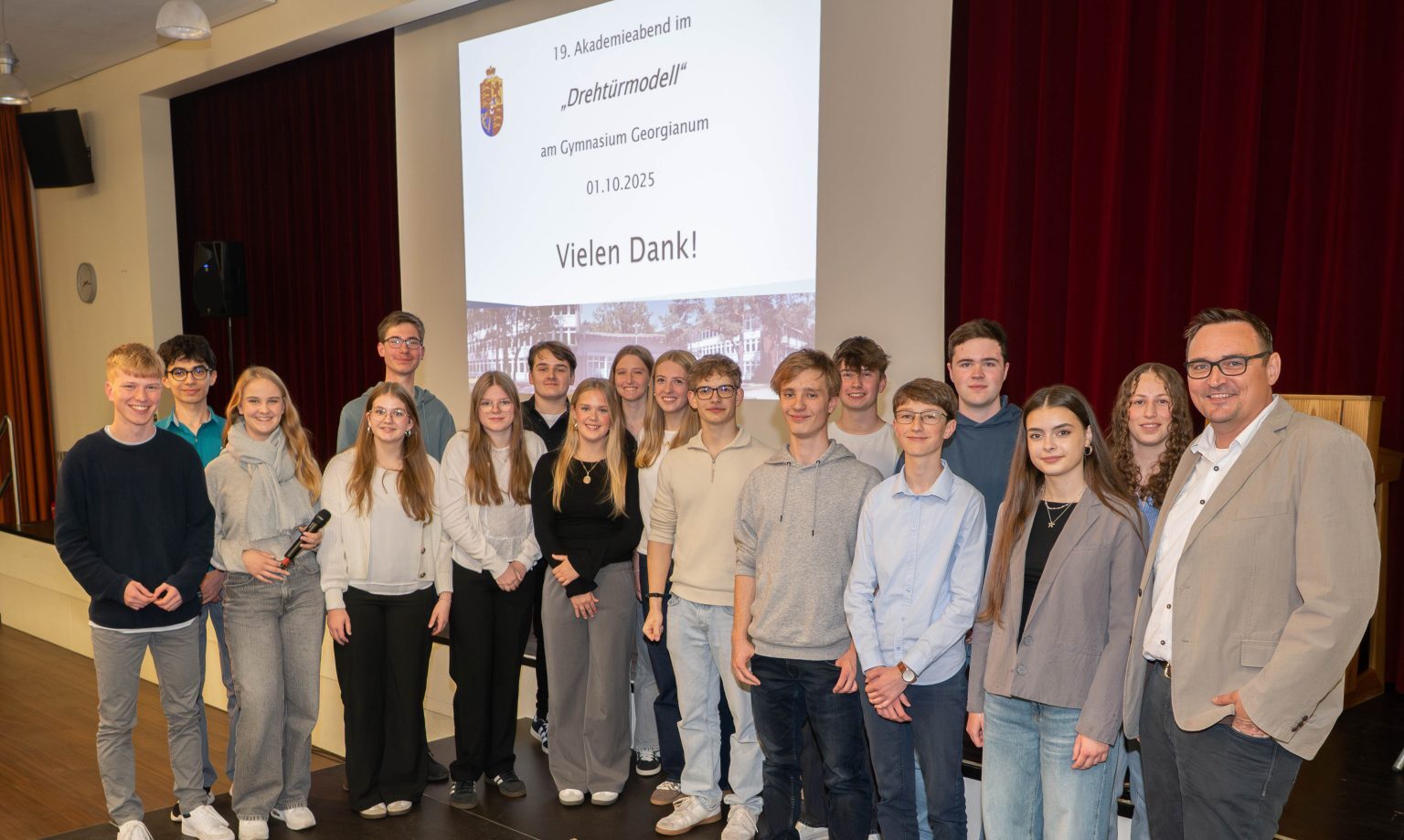
The speakers and contributors to the successful Academy Evening.
The groups first posed a key question or thesis, which was then discussed using a rigorous structure.
All participants demonstrated a high degree of independence and self-reliance as well as enormous perseverance, as most of the research had to be done outside of class, which was certainly not always easy over such a long period of time.
This in particular demonstrates the extraordinary willingness of the students to engage intensively with their topic and, at the same time, to acquire new skills through self-study that will help them in their future studies and/or professional life. The participants presented their results to the (school) community in approximately fifteen-minute presentations.
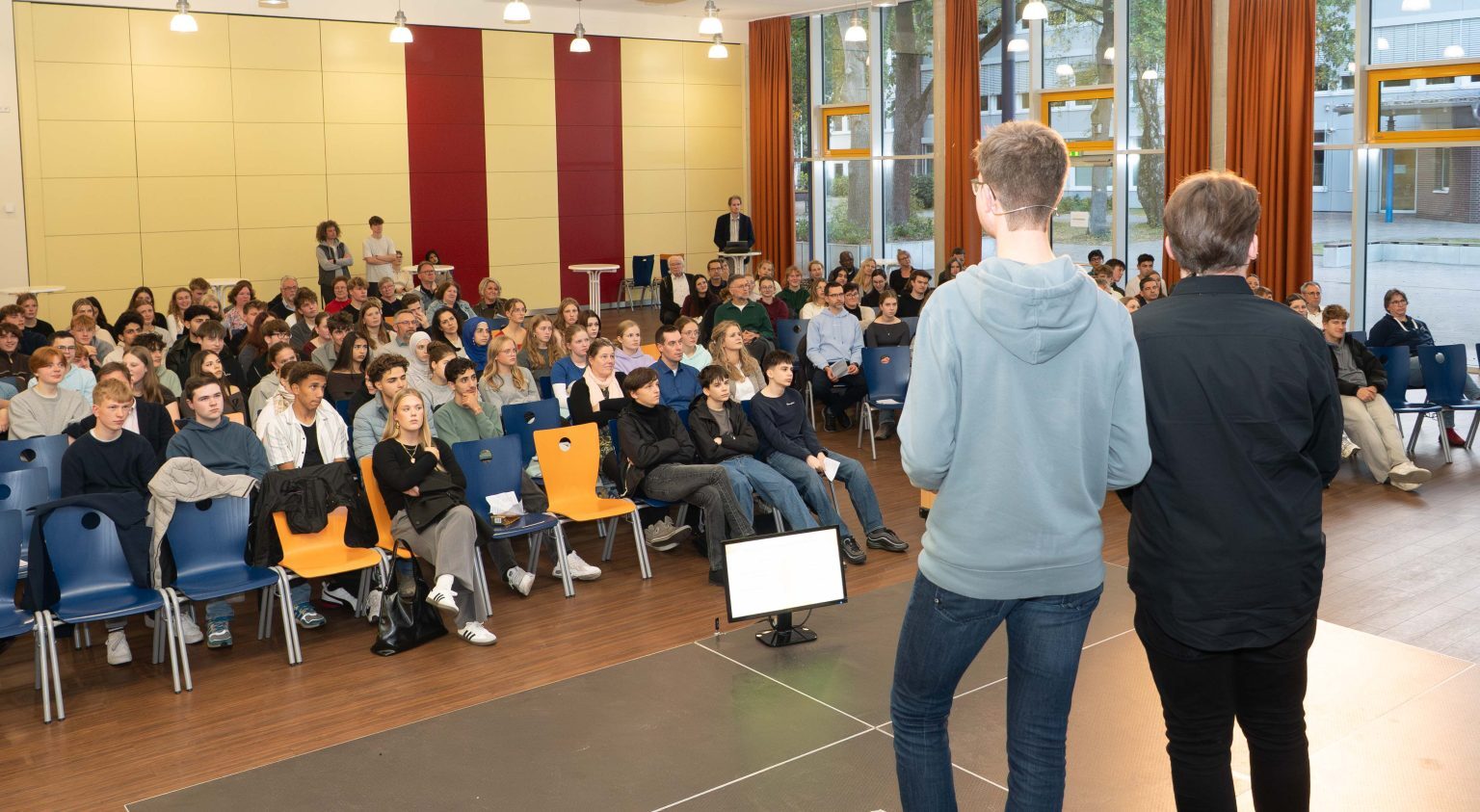
After a welcome by Mr Sieberg, in which he emphasised the importance and long tradition of what is now the 19th Academy Evening for our school, and a short introduction by Mr Zermann, Lisa-Marie Wolters guided the audience through the programme.
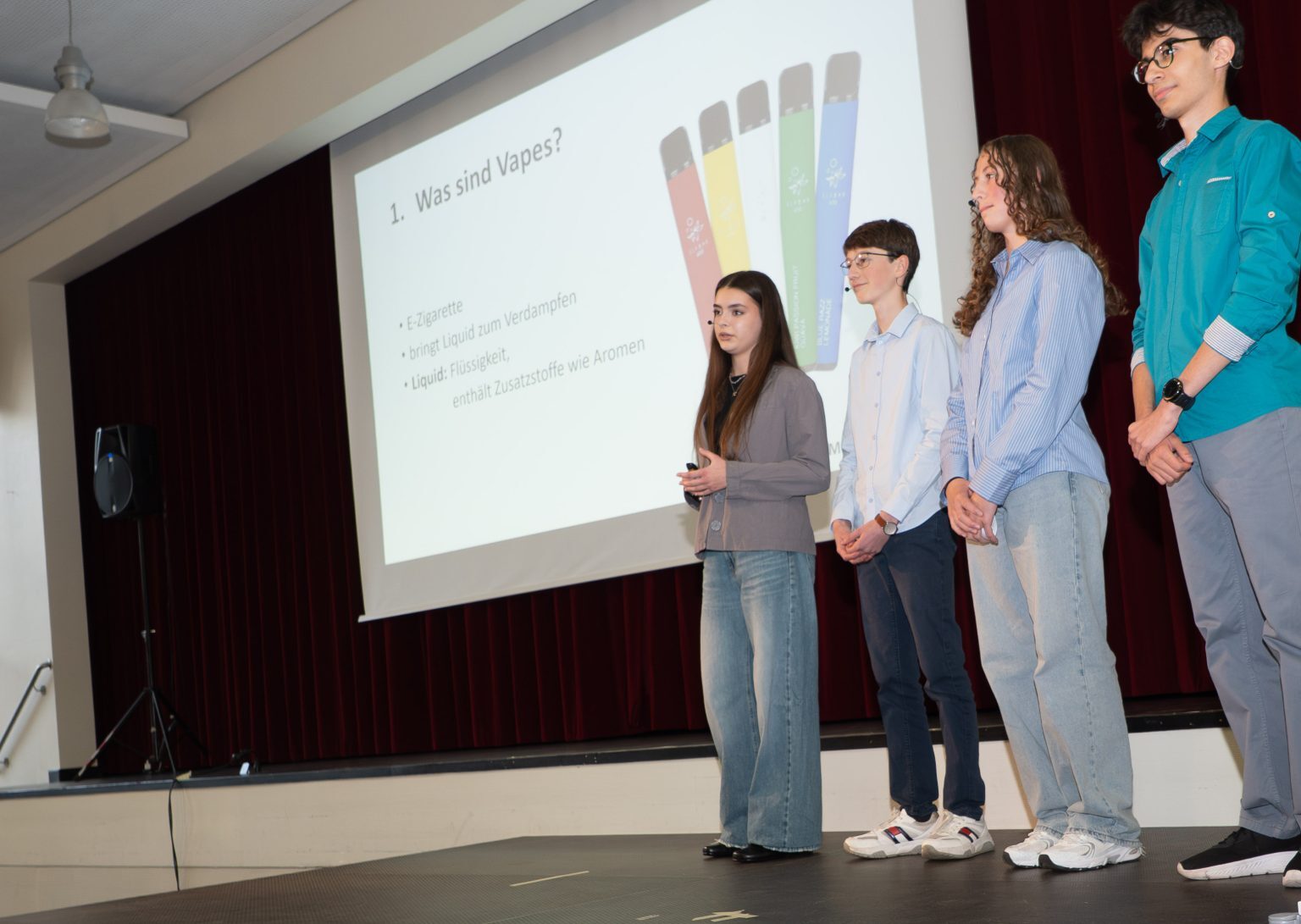
First, Sophia Beck, Emma Teckert, Joah van Westen and Radin Seghatoleslam presented their findings and survey results on the topic of "vapes".
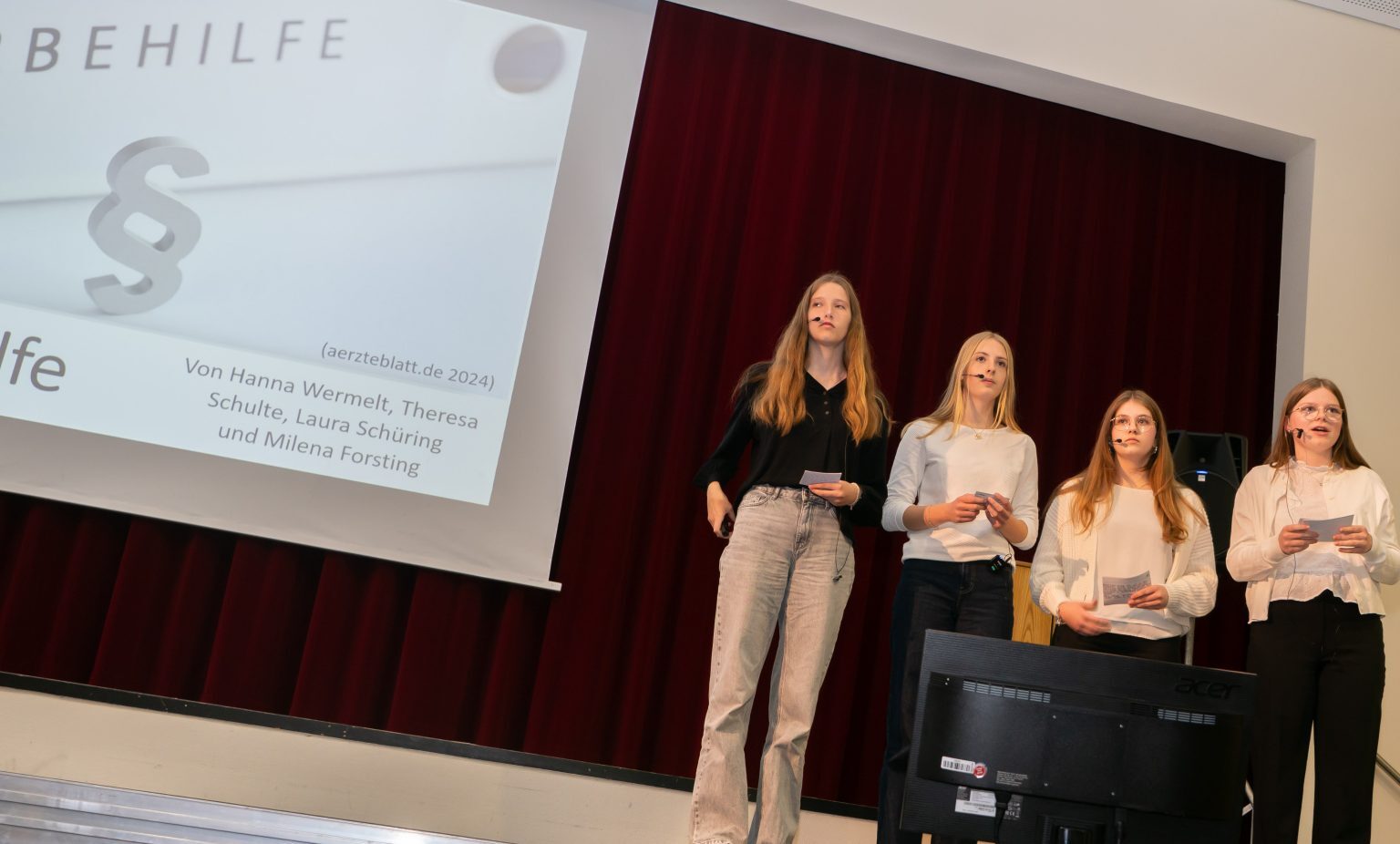
Milena Forsting, Laura Schüring, Theresa Schulte and Hanna Wemelt then discussed the question of whether active euthanasia should be permitted in Germany.
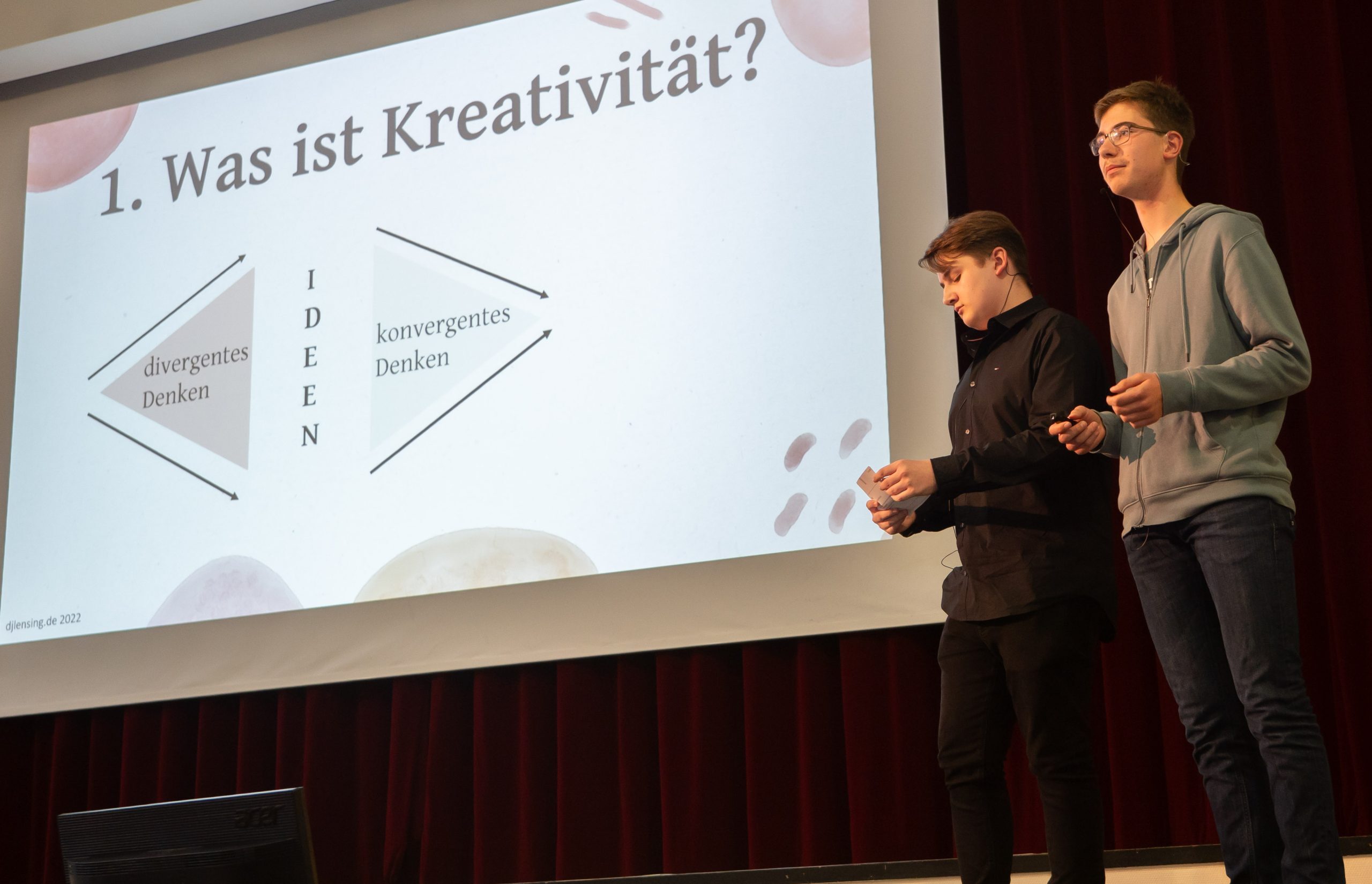
"Creativity in society is dying out!" was the central thesis of Danny Stuhler and Jano Gerling. The two students explained that the creativity rate in society is indeed declining somewhat, and therefore also presented possible improvements. This was followed by a new feature in the revolving door model.
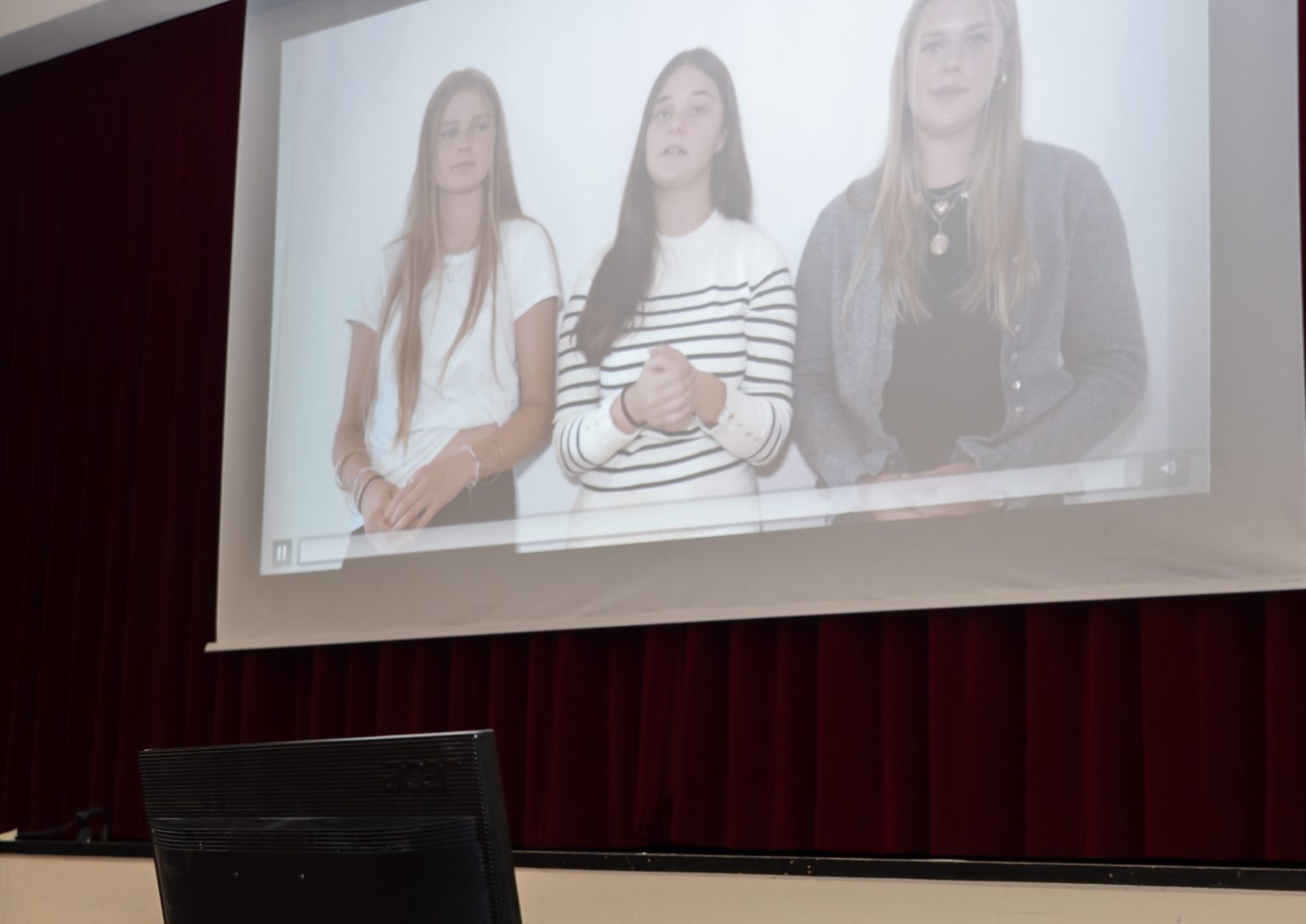
Hanna Herbers, Lena Langenbrink and Junis Muci offered a premiere in the revolving door model: they presented their findings on the question of whether the Indian caste system had been overcome, not as a lecture, but in the form of a pre-recorded video.
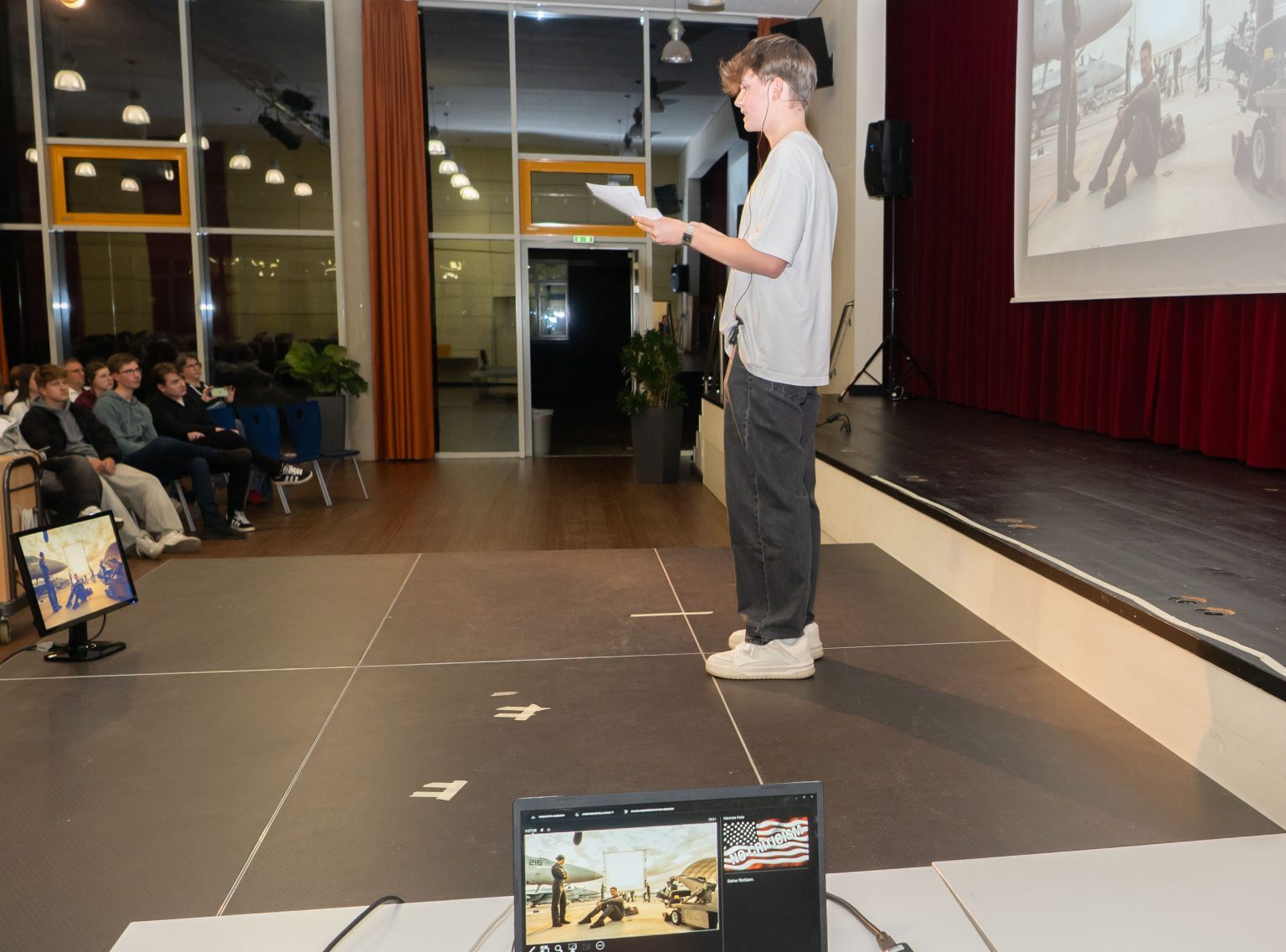
Moritz Knospe then explained the influence of the state apparatus on the film industry in the USA by showing how closely the two actors work together.
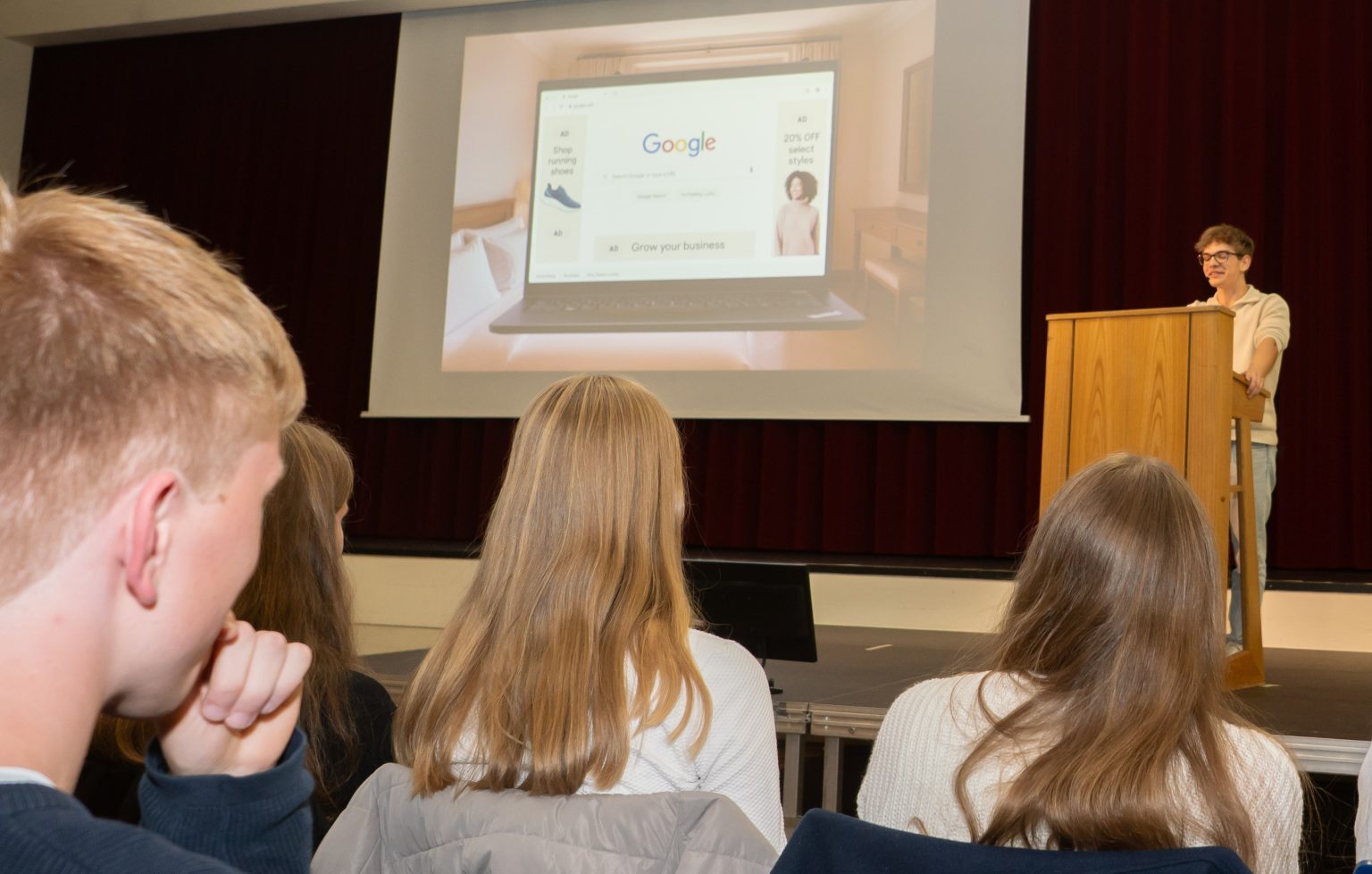
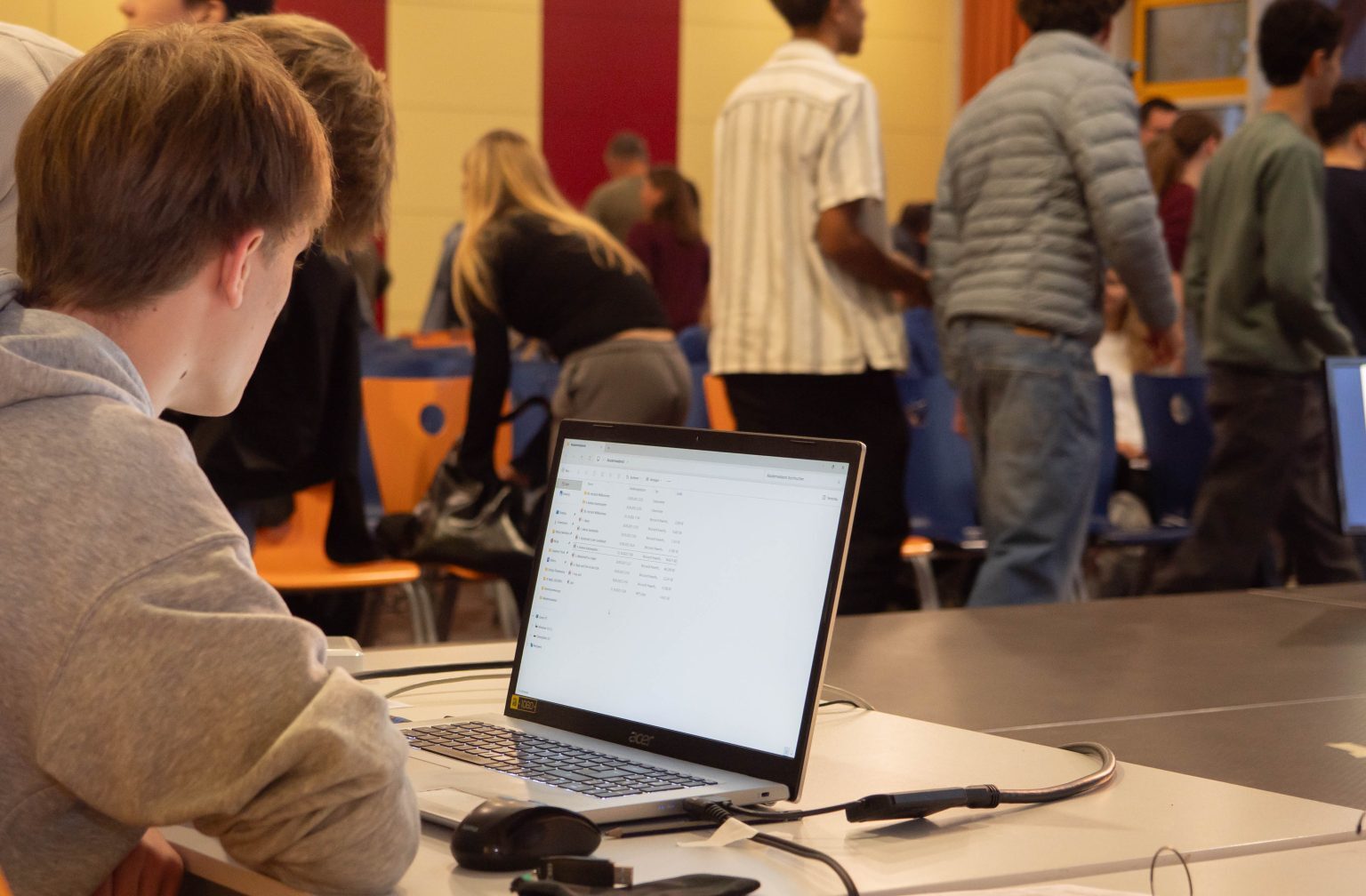
Finally, Leonard Krämer pointed out the dangers of public Wi-Fi networks by letting the audience log into a Wi-Fi network that he had slightly manipulated. He then showed how to protect oneself from the dangers that arise.
After the last presentation, the speakers thanked Mr Zermann, the organiser of the academy evening and mentor to the speakers, with a small gift.